

Our Method
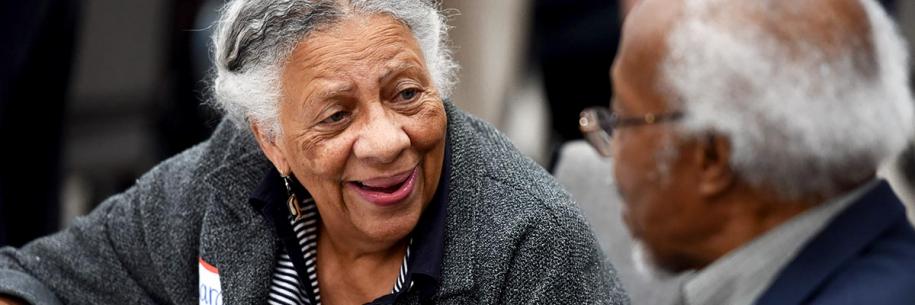
Essential Partners envisions a world of thriving communities strengthened by difference, connected by trust.
Working at the intersection of community engagement, conflict resolution, culture change, de-polarization, and dialogue across differences, Essential Partners was founded in 1989 by a group of behavioral health researchers and practitioners. They embarked on an innovation process to apply theoretical frameworks and effective therapeutic practices to discussions of polarized, divisive public issues. That approach would come to be called Reflective Structured Dialogue®.
This origin makes EP unique among organizations that reduce polarization, deepen belonging, and create more inclusive, dynamic, collaborative cultures in the spaces where people live, work, worship, and learn.
At EP, we draw the connections between personal development and systems transformation. Our model interrupts dysfunctional, self-perpetuating dynamics that stifle trust, understanding, and collaboration—particularly those that arise across differences of identity, belief, personality, and perspective. Our approach addresses patterns such as:
- The same small group of vocal people dominating conversations
- The silence and underrepresentation of people who have complex, marginalized, or underdeveloped views
- Stereotyping, polarization, and misinformation campaigns
- Disengagement or avoidance driving low classroom engagement, reducing democratic participation, and hurting employee retention.
- Interruptions, angry outbursts, and personal attacks
- Confirmation bias, the human tendency to seek out facts that support one’s own perspective while dismissing evidence that forces them to question their values or beliefs
- Repetitive or surface-level debates where little new insight surfaces while the values, intentions, and complexities of opponents go untested
These patterns are common in conflicts across ideological or identity lines. We also find the them within groups whose members have a shared identity and common goals. They often disagree about priorities and strategies. Sometimes these patterns are covered by a silence that hides the underlying disagreement.
Our approach changes the way people understand and relate to one another. It helps people speak about the things that matter most. It's not just a debate about specific issues or policies. It get below the surface tensions and the rhetoric. Our approach gets down to their deeply held values, their formative experiences, their genuine hopes and fears.
We give people the tools to see each other as human beings, and that is a transformative experience.
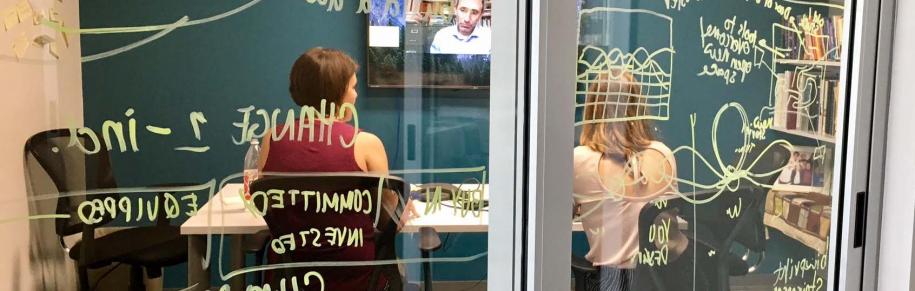
Reflective Structured Dialogue
Reflective Structured Dialogue® (RSD) is a framework
for culture change. It is research-based, flexible, and scalable. RSD equips people to interrupt dysfunctional dynamics. It helps them build relationships across differences so they can address challenges where they live, work, worship, and learn.
EP's founders were behavioral health researchers and practitioners. As a result, RSD is rooted in proven therapeutic strategies. It also draws on insights and innovations from other related fields. These include professional mediation, systems theory, conflict resolution, interpersonal communication theory, appreciative inquiry, narrative approaches, organizational development, psychology, and neurobiology.
Browse our archive of peer-reviewed and published research on RSD.
RSD makes change possible in diverse contexts across the globe. It equips local stakeholders to drive change on their own terms, within their own norms and values. Because of its flexibility and therapeutic roots, it is uniquely able to interrupt polarized conflicts over differences in identity, values, and perspectives.
The core premises of Reflective Structured Dialogue are:
- People get stuck in polarized conflicts. These cycles are hard to recognize and nearly impossible to change organically. They erode trust, deepen division, and discourage collective action. They stop communities and institutions from addressing problems. Unchecked, these cycles can lead to intergroup violence and social deterioration.
- Changing the way people communicate can interrupt polarization. RSD fosters complexity, repairs trust, and generates new relationships. It stops polarized cycles of conflict. This leads to healthier norms, less division, and better communication. We never ask people to change their views. RSD helps people see their peers and neighbors as individuals with complex identities and experiences that shape their views. The differences remain, but now with dignity and mutual trust.
- Change is most effective from the ground up. We train people who live, work, pray, and learn together in the community. They change the way different groups communicate. Dialogue becomes part of the culture, “Just how we do things.” That makes bigger changes possible. It disrupts the dysfunctional cycles and stuck conversations. People encourage shifts in informal ways, such as modeling the behavior and coaching others. They also do it in more formal ways, such as leading facilitated dialogues or building dialogue exercises into lesson plans. The bottom line: we can't change your community, only you can change it.
- Many small shifts drive larger changes. The combination of formal and informal shifts—such as redesigning the way weekly meetings run, or using dialogue as part of community engagement programs—can transform the culture of entire communities. When used consistently, those changes influence the norms of regions, states, and the country.
Through training, consultation, coaching, facilitation, and long-term collaboration, EP equips people to live and work better together. RSD strengthens pluralism and diversity, which are the foundations of a healthy democratic society. As our collaborations have grown, we have continued to innovate and refine our approach. Reflective Structured Dialogue, however, remains the active ingredient in all our work.
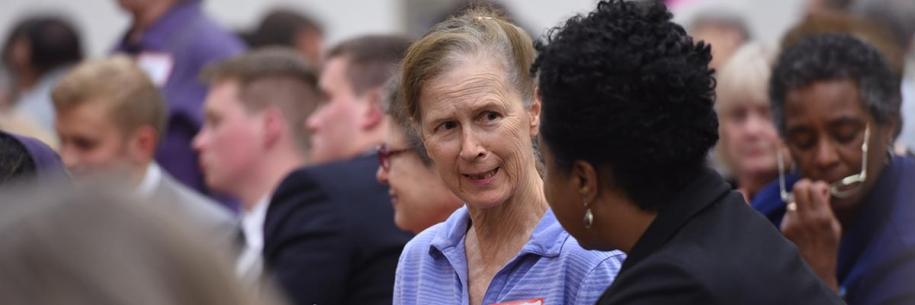
EP's Core Practices
How do we support the goals of every community, college, school, and institution we work with? How do we account for the unique cultural contexts of each space and each community? Over four decades, we have developed a set of core practices that invite a collaborative expertise, a tailored program design, a goal of sustainable empowerment, and a transformative theory of change grounded in well-researched methodologies.
We map the context with partners, learn about current dynamics, and explore the hopes people have for their shared future. Before we begin a collaboration with any community, college, school, or institution, we interview stakeholders to discover what has, and has not, been constructive in the past. We identify the particular hopes and concerns that motivate our partners to embark on the collaboration. We cater our interventions to reflect those challenges, patterns, experiences, hopes, and concerns.
We are transparent as we plan to build trust, legitimacy, and buy-in. People are often understandably skeptical of outsiders who open conversations about challenging topics—topics that touch on identities, values, conflicts, or histories of mistrust. Through interviews, conversations, and invitations, we ensure that all the stakeholders (planners, conveners, facilitators, and participants) have clear and accurate ideas about both the plan of activities and what will be expected of them. This invites an emergent, consensus-based planning process.
We engage in collaborative design to foster participants’ ownership of this approach. Whether they’re still coping with the aftermath of violent conflict or they’ve participated in poorly-executed efforts at dialogue in the past, stakeholders often enter into the planning process with a guarded, threatened, or dismissive outlook. It is often warranted, based on their experience. EP’s process is unique. We foster a sense of shared responsibility and ownership for the discussion.
Our approach equips stakeholders with the ability to deploy and adapt our model in response to the unique needs and context of their community. We do not parachute into communities and organizations with a quick fix. We teach facilitators and leaders how to respond to emerging needs, shifting norms, changing stakeholder groups, and evolving priorities. This holistic approach makes it possible for each community to apply our tools long after the direct collaboration with EP ends.
By fostering trust and ownership within the collaborative process, we empower communities to carry forward long-term sustainable solutions.
We seek the involvement of trustworthy and representative conveners or co-conveners. In some situations, EP serves as both facilitators and conveners. But in many cases, we partner with individuals or groups who are known and trusted by the community stakeholders—who are willing to sponsor, offer legitimacy, and help plan the dialogue. We seek conveners who are trusted by all major stakeholder groups involved in the process, particularly those who have been historically underrepresented in decision-making processes.
We do not lead programs in which participants are required or pressured to attend. Voluntary participation is crucial to participant ownership. It empowers people to use their voice when they feel their opinions will be heard and taken seriously, and when they are ready to do so. We ask that every participant who chooses to attend be committed to the stated intentions of the project. When that free commitment is absent, it can drain energy from the engagement and cloud its intention.
We train stakeholders in our Reflective Structured Dialogue framework in a manner that is responsive to participants’ emerging needs and interests. Our commitments to collaboration and transparency are evident in the way we teach facilitation. We engage participants in the ongoing planning process, encouraging them to remain open and flexible throughout the process.
We support partners as they shift norms, navigate difficult conversations, reduce polarization, and address dysfunctional systems. Over time, healthier approaches to public discussion and communication about differences will become part of a community’s DNA. This capacity manifests in the space between a question and answer, in the agenda for meetings, in the flyers for a town hall meeting. It becomes part of the culture of a community as people lean into the possibilities of pluralism without succumbing to relativism.
Communities become more cohesive as people shift to share some of the weight of discomfort that comes from having to adapt to fit in. They belong to each other and create their future together. When difficult moments arise, they come together to navigate those challenges with greater resilience, trust, and understanding.
Throughout this process, over the course of years, we remain essential partners. We support our partners through consultation, coaching, ongoing learning opportunities, and in-person gatherings to offer ongoing support and encouragement.
Ready to foster a thriving community strengthened by difference, connected by trust?